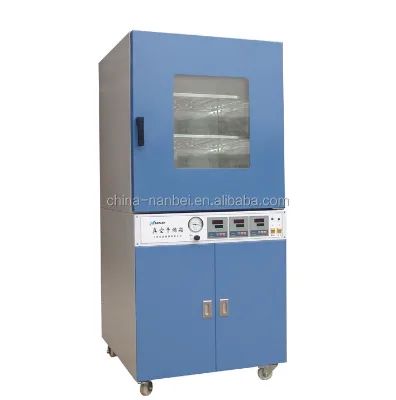
Source Microprocessor Control Vacuum Drying Oven for Lab Hospital School
Find 30 Microprocessor Control Vacuum Drying Oven models from China with capacities ranging from 20 to 240 liters. Compare specifications including heating modes, voltage, and certifications like CE and ISO for use in laboratories, hospitals, and schools.
Key considerations
Products List


Vacuum Drying Oven with Pumb, Lab Thermostatic Device, Industrial Vacuum Dryer
$2450.00 - $2680.00
MOQ: 1 Pieces


Precise Temperature Control Durable Stainless Steel Vacuum Drying Oven
$1500.00 - $100000.00
MOQ: 1 Pieces

Low-Temperature Rapid Drying Full Customization Available Vacuum Drying Oven
$1000.00 - $100000.00
MOQ: 1 Pieces

Flexible Configuration Advanced Low-Temperature Vacuum Drying Oven
$1500.00 - $100000.00
MOQ: 1 Pieces


Flexible Configuration Advanced Rapid Drying High Temperature Vacuum Drying Oven
$1500.00 - $100000.00
MOQ: 1 Pieces

Customization Available High Vacuum Performance Vacuum Drying Oven
$1500.00 - $100000.00
MOQ: 1 Pieces



Comprehensive Sourcing Guide
Microprocessor Control Vacuum Drying Oven Sourcing Guide
Procuring a Microprocessor Control Vacuum Drying Oven requires a disciplined approach to balancing thermal precision with vacuum integrity. These units are engineered to remove moisture and solvents from heat-sensitive materials by lowering the boiling point of liquids through reduced pressure. The integration of microprocessor controls allows for sophisticated programming of temperature ramps, vacuum levels, and hold times, which is critical for reproducible results in research and industrial settings. Buyers must recognize that the "microprocessor" label implies digital feedback loops for both heating elements and vacuum pumps, offering superior stability compared to manual analog gauges. This digital oversight minimizes human error and ensures that delicate samples, such as pharmaceuticals, biological specimens, or advanced ceramics, are not damaged by thermal shock or excessive drying times.
The sourcing landscape for these ovens is characterized by a wide variance in capacity, construction materials, and auxiliary features. While the core function remains consistent, the specific configuration—whether it is a desktop unit for laboratory benchtops or a larger floor-standing model for production lines—drives significant differences in cost and logistical requirements. Buyers should focus on verifying the actual internal volume against the external footprint, as insulation thickness and door design can impact usable space. Furthermore, the choice between different heating modes, such as convection or radiation, and the type of vacuum pump interface, whether direct or via a separate external pump, will dictate the operational workflow. Understanding these structural nuances is essential before engaging with suppliers, as mismatched specifications can lead to inefficient processing or incompatible facility infrastructure.
Product Scope and Observed Listing Signals
The current market listings for vacuum drying ovens reveal a diverse range of models, with observed price points spanning from approximately $1 to over $100,000 USD. This broad spectrum reflects the disparity between small-scale desktop incubators and large-capacity industrial dryers. Minimum Order Quantities (MOQ) are frequently listed as one unit, indicating that these machines are typically sold as individual capital equipment rather than bulk commodities. Buyers should interpret the price range as a signal to scrutinize the specific model number and capacity, as a $1 listing may represent a placeholder or a very small benchtop unit, while higher figures correspond to complex systems with multiple chambers or specialized materials. The presence of models like the DZ-1BCII, DZ-2BCII, and DZF-6051 suggests a standardized naming convention that often correlates with specific internal volumes, such as 52L, 91L, or 224L.
Listing attributes also highlight significant variations in customization and structural design. Many suppliers offer desktop structures with vacuum styles, catering to space-constrained laboratories, while others provide larger units suitable for hospital or school environments. The material composition is predominantly stainless steel, which is essential for corrosion resistance and ease of cleaning in hygienic applications. However, buyers must verify if the stainless steel grade is suitable for the specific chemicals or solvents being dried, as lower grades may degrade over time. Additionally, the availability of customization options, including non-customized standard models and bespoke configurations, allows for tailored solutions. The packing methods, ranging from standard export cartons to extra-heavy strong cartons and wooden packing, indicate that shipping fragility and protection are significant considerations, particularly for international procurement where transit damage can compromise the vacuum seal or electronic components.
Technical Specifications to Verify
When evaluating technical specifications, the internal capacity is a primary determinant of throughput and energy efficiency. Observed capacities include 224L, 52L, and 91L, with some product lines offering sizes ranging from 20 to 240 liters. Buyers must calculate the required volume based on the bulk, strap, cream, solution, powder, or other material statuses they intend to process, ensuring that the shelf area and chamber height accommodate the sample geometry without obstructing airflow or vacuum distribution. The temperature resolution ratio is another critical parameter, with some units offering a precision of 0.1°C. This level of granularity is vital for processes requiring tight thermal control, such as curing adhesives or drying sensitive biological samples. Buyers should verify if the microprocessor control allows for programmable temperature profiles rather than just static setpoints, as dynamic control can significantly improve drying efficiency and product quality.
The heating mode and drying medium are equally important technical factors that influence the suitability of the oven for specific applications. Common heating modes include transmission and convection, while drying mediums can be air or inactive gas. The use of inactive gas is particularly relevant for materials that are reactive with oxygen, ensuring that oxidation does not occur during the drying process. Voltage and power specifications, such as 220V/50Hz and 1600W, must be matched to the facility’s electrical infrastructure to prevent overloading circuits or underperforming due to insufficient power. Additionally, the operational method, whether continuous or batch, dictates the workflow integration. For high-throughput environments, continuous operation may be preferred, whereas batch processing is more common in research settings. Buyers should also confirm the movement way of the shelves or racks, as fixed or combined movement mechanisms affect how samples are loaded and unloaded, impacting labor efficiency and safety.
Compliance and Safety Documentation
Compliance with international standards is a non-negotiable aspect of sourcing laboratory and industrial equipment. The observed listings frequently cite certifications such as CE, ISO, and SGS, which indicate adherence to European safety directives and international quality management systems. The CE mark, in particular, is essential for selling or operating equipment within the European Economic Area, ensuring that the product meets strict health, safety, and environmental protection requirements. Buyers should request copies of the actual certification documents rather than relying solely on marketing claims, as the validity and scope of these certifications can vary. The presence of RoHS certification is also notable, indicating that the equipment is manufactured without certain hazardous substances, which is increasingly important for environmental compliance and workplace safety.
Safety features and warranty terms provide additional layers of assurance for the procurement team. A standard warranty of one year is commonly observed, covering defects in materials and workmanship. However, buyers should clarify what is excluded from the warranty, such as consumable parts like filters or seals, and whether on-site service is included. The after-sales service承诺 of "all life" support suggests a long-term commitment from the supplier, but the specifics of this support, including response times and spare parts availability, must be defined in the contract. Furthermore, the operational safety of vacuum ovens involves risks related to high temperatures and pressure differentials. Buyers should verify that the unit includes safety interlocks, such as automatic venting in case of power failure or over-temperature protection, to prevent accidents. Documentation should also include detailed user manuals and maintenance schedules to ensure safe and efficient operation over the equipment’s lifespan.
Cost Drivers and Commercial Terms
The cost of a Microprocessor Control Vacuum Drying Oven is influenced by several key drivers, including capacity, material quality, and control sophistication. Larger capacities, such as 224L units, naturally command higher prices due to the increased amount of stainless steel and insulation required. Similarly, ovens with advanced microprocessor controls that offer precise temperature resolution and programmable cycles are more expensive than those with basic digital displays. The type of vacuum pump interface, whether integrated or external, also affects the total cost, as high-performance vacuum pumps are significant additional investments. Buyers should consider the total cost of ownership, which includes energy consumption, maintenance costs, and potential downtime, rather than just the initial purchase price.
Commercial terms and logistics play a crucial role in the final landed cost. The observed MOQ of one unit simplifies the purchasing process for most buyers, but shipping costs can be substantial due to the weight and size of these machines. The packing method, whether standard carton or wooden packing, impacts both the protection of the goods and the shipping volume. Buyers should negotiate clear Incoterms to define responsibility for freight, insurance, and customs clearance. Additionally, payment terms should be structured to mitigate risk, such as using a letter of credit or escrow service for high-value transactions. It is also important to verify if the quoted price includes installation, commissioning, and training services, as these can add significant value and reduce the risk of operational errors during the initial use phase.
Supplier Qualification and Quality Control
Supplier qualification is a critical step in ensuring the reliability and longevity of the vacuum drying oven. Buyers should verify the supplier’s manufacturing capabilities, including their facility size, production lines, and quality control processes. A supplier with a strong track record in producing laboratory equipment is more likely to deliver a product that meets technical specifications and safety standards. The origin of the product, often China for these types of ovens, should be considered in the context of the supplier’s export experience and reputation. Buyers can assess this by reviewing customer testimonials, case studies, and the supplier’s participation in industry exhibitions. Additionally, the availability of customization services indicates a flexible and responsive manufacturing process, which can be beneficial for specialized applications.
Quality control measures should be transparent and verifiable. Buyers should request information on the testing procedures used before shipment, such as vacuum leak tests, temperature uniformity checks, and electrical safety inspections. The use of standard export packing, including extra-heavy strong cartons or wooden crates, is a positive indicator of care in handling fragile components. However, buyers should also consider conducting a pre-shipment inspection or hiring a third-party inspection agency to verify the quality of the goods before they leave the factory. This step can help identify any defects or discrepancies early, allowing for corrective actions before the equipment is shipped. Furthermore, establishing a clear communication channel with the supplier for technical support and troubleshooting is essential for resolving any issues that may arise during installation or operation.
Long-Term Procurement Checks
Long-term procurement success depends on the supplier’s ability to provide sustained support and spare parts availability. Buyers should inquire about the expected lifespan of critical components, such as the vacuum pump, heating elements, and microprocessor control board, and the availability of replacement parts. A supplier that offers a comprehensive spare parts catalog and technical documentation is better positioned to support the equipment throughout its operational life. The warranty terms should be reviewed for clarity on coverage duration and scope, and buyers should ensure that the supplier has a local or regional service network to provide timely assistance. This is particularly important for industrial applications where downtime can result in significant production losses.
Regular maintenance and calibration are essential for maintaining the performance and accuracy of the vacuum drying oven. Buyers should establish a preventive maintenance schedule that includes cleaning the chamber, checking the vacuum seal, and calibrating the temperature and pressure sensors. The supplier should provide detailed maintenance guidelines and recommend the use of genuine spare parts to ensure optimal performance. Additionally, buyers should monitor the equipment’s performance over time, tracking metrics such as drying time, energy consumption, and temperature stability. Any deviations from expected performance should be investigated promptly to identify potential issues with the heating elements, vacuum system, or control electronics. By proactively managing the equipment’s lifecycle, buyers can maximize its utility and return on investment.
FAQs
What certifications do these vacuum drying ovens hold?
These units hold ISO, CE, and SGS certifications. Some models also include RoHS compliance. These standards ensure safety and quality for lab, hospital, and school applications.
Can I customize the capacity of the drying oven?
Customization is available for specific models. Capacities range from 224L down to 52L and 91L. You can select from standard export cartons or wooden packing based on your needs.
Which materials are used to construct these ovens?
The primary material is stainless steel. This ensures durability for processing bulk, strap, cream, solution, and powder materials. The structure is designed as a desktop unit for stability.
How is the heating mode configured in these units?
The heating mode utilizes transmission methods with air as the drying medium. Some variants use inactive gas for specific applications. Voltage is typically 220V at 50Hz with 1600W power.
What warranty and after-sales service are provided?
A one-year warranty is standard for these products. After-sales service covers all life of the unit. This support applies to models like DZ-1BCII and DZF-6051 originating from China.
Which operational methods are supported by the dryer?
The operational method is continuous for efficient processing. Movement ways include fixed or combined options depending on the model. These features suit industry and laboratory environments effectively.